
Postpartum Toolkit
For New Parents and Their Support Networks:
An average of one in seven women can develop postpartum depression.
Local Postpartum and Family Resources:
Perinatal Mental Health Support Groups
In person and virtual groups are available
In-Person Support and Therapy
Postpartum effects 1 in 6 parents in Tehama County. Therapy and support groups are a safe space to share how you are adjusting to parenting, stressors, pregnancy depression/anxiety and much more.
If you’re pregnant or with a child under 12 months, you can use this form or call directly for help and support. There is no requirement of insurance, income or any other financial barrier.
Sign up using this form or call Laura Burlison for more information: 530-840-1124
If you are curious about Postpartum needs; or supporting a parent (co-parent, spouse or friend) you may download this toolkit to learn more.


Virtual Support
If you are pregnant or have a child under 5 and are adjusting to all the transitions and stressors in parenthood The Empowered Mom Collective is for you. Join this virtual group to share, feel safe and experience hope and be empowered.
Sign up using this form.
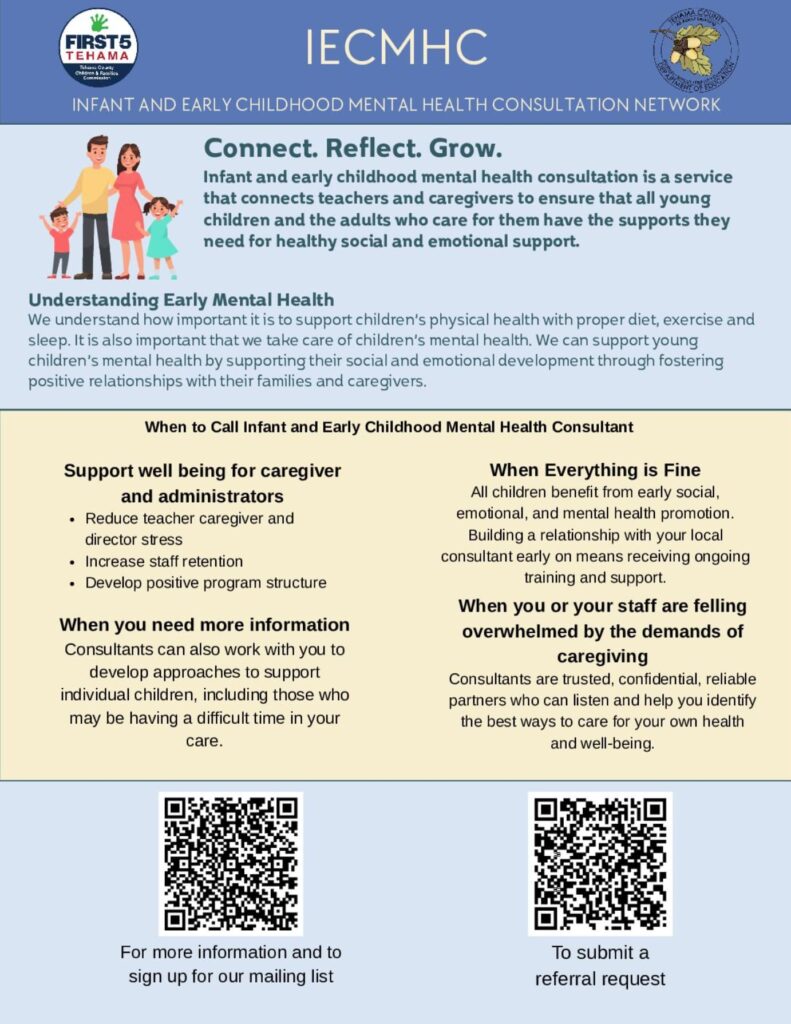
Infant-Toddler-and Early Childhood Mental Health
Infant and Early Child mental health is the developing capacity of a child — from birth to age five — to experience, regulate, and express emotions; form close and secure relationships; and explore and learn about their world, all within the context of family, community, and culture.
It is the architectural foundation for all future learning, behavior, and health.
Like any strong structure, it’s built through everyday interactions — simple moments that build trust, safety, and connection.
Professionals supporting families with concerns can use the Infant Early Childhood Mental Health Consultation referral to learn more about support.

Now he plays alongside other children, uses more language, and even asks peers for help. Kids aren’t scared of him anymore, and we’ve learned how to support his interests like music and trains to help him connect.
ACEs Aware Tehama Movement
Resources Developed by Tehama ACEs Aware
Email abrinkman@first5tehama.com to request copies of these resources.
REACH OUT & CONNECT
RELATIONSHIPS ARE IMPORTANT FOR THE HEALTH AND WELL-BEING OF EVERY FAMILY.
MENTAL HEALTH IS JUST AS IMPORTANT AS
PHYSICAL HEALTH
Relationships with other supportive adults can help your brain and body turn down the stress response and build resilience.
And Mental health support can play an important role in protecting children from the effects of toxic stress.
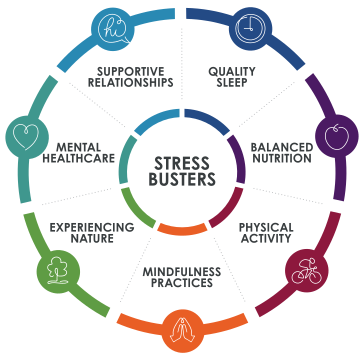
Making time to relax, engage in a fulfilling hobby, or participate in a fun activity can help a lot, too!
- MENTAL
- SUPPORTIVE
- HEALTH CARE RELATIONSHIPS
- ACCESS TO NATURE
- STRESS BUSTERS
- MINDFULNESS PRACTICES
- PHYSICAL ACTIVITY
- QUALITY SLEEP
- BALANCED NUTRITION
And sometimes we need support from health professionals too. Seeking mental health treatment is about taking action as soon as you notice a problem, so your child or other family member can get the help they need and feel better.
Counseling and other kinds of mental health treatment can be helpful for children who have faced difficulties in life. This kind of support may also help you if you’ve experienced trauma as a child or adult
HERE ARE LOCAL RESOURCES YOU MIGHT TRY:

Read full story on local efforts in ACEs Aware have developed or download it here.